Article: Scissors knowledge
scissor knowledge
The form
There are four types of shears, each with different ergonomic features. In the Classic, the upper and lower blades are identical. The Chiro shape is characterized by an optimized blade/shank ratio with leverage. In the various Offset designs, the angled handle area or shortened thumb bevel ensures a natural hand position and relaxed working. The special Crane shape allows for an ergonomic scissor position that relieves strain on the hand, arm, and shoulder joints.

shear naming

Criteria for good scissors
Serrated blades are particularly suitable for contour cutting and for beginners, as they minimize feed. However, slicing techniques are only possible with polished blades. Various grinding techniques and cutting angles are used to achieve sharpness and durability, which is optimized in the Premium Line with the integrated CONB LADE blade. Good modeling/thinning scissors must be able to be pulled out of the mesh when closed, and the hair must not be crushed. This is perfectly achieved with the Tulip serration from the S and Premium lines and their enlarged catch areas.
The cutting edge

The screw system
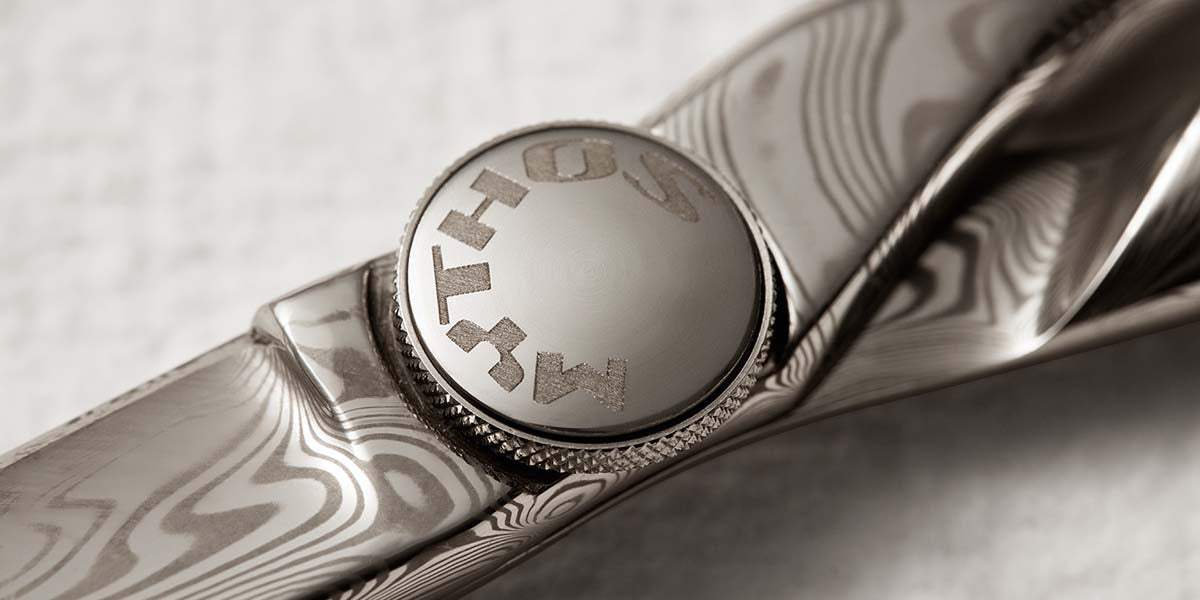
If a screw is loose, the scissor blades will not close properly, which can damage the cutting edges. A screw that is too tight can also destroy the cutting blades. TONDEO screws TONDEO the scissors are tensioned to the optimum level.

The gang site
A good pivot point must ensure that the scissor blades do not tilt into each other. The more precise the pivot point, the more stable the cut, the more durable the scissors, and the easier they are to use. TONDEO have special pivot points that optimize these characteristics.